
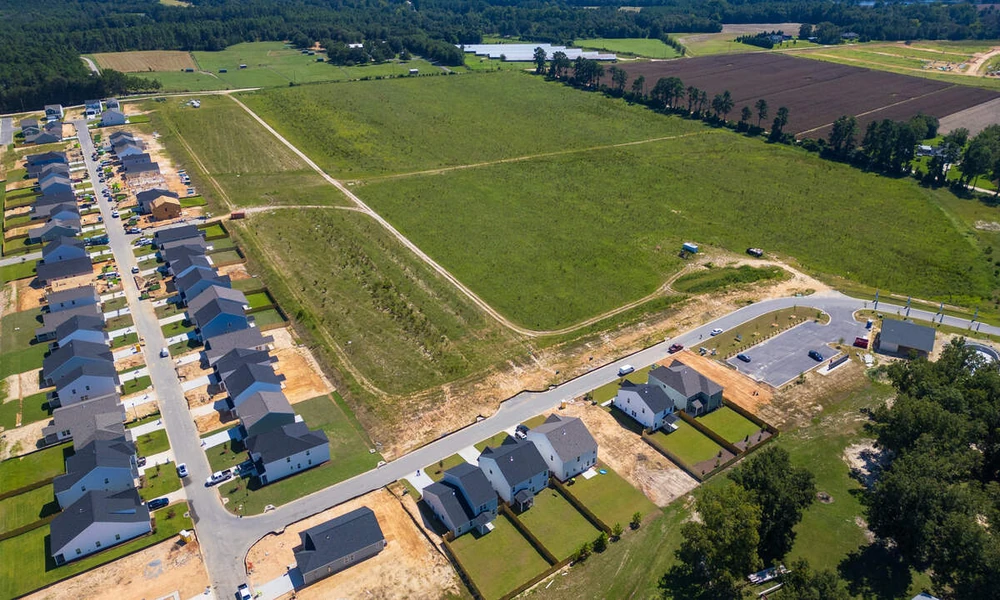

Nearly 80,000 people moved to South Carolina in a single year. That number is not a rounding error. It is bigger than the entire population of Rock Hill, and most of those newcomers needed a roof over their heads the day they arrived. Some bought newly built homes. A lot more bought existing ones, and existing homes in the Palmetto State tend to carry roofs that are quietly aging past their warranty.
The roofing surge happening across the Upstate right now is not random. It is the direct product of three overlapping forces: record in-migration, a housing stock that started the decade already showing its age, and storm patterns across the Southeast that punish deferred maintenance. Understanding how those forces interact helps homeowners time their projects better and helps contractors plan capacity months ahead of demand spikes.
A State That Cannot Stop Growing
Between July 1, 2024, and July 1, 2025, South Carolina’s population grew at a rate of 1.5 percent, faster than any other state in the country, according to the U.S. Census Bureau. That is not a one-year anomaly. South Carolina has consistently ranked in the top six among all states for population growth in each of the last five years.
That growth largely concentrates along major urban areas, with Greenville County leading at 578,000 residents and growing 9.7% since 2020. Greenville is not a sleepy Upstate town anymore. It is pulling remote workers from the Northeast, retirees from the Midwest, and young families priced out of Charlotte. Every household that lands there eventually faces the same question: what shape is this roof in, and how long before I have to deal with it?
The honest answer, more often than not, is “sooner than you think.” A buyer who moves from New York to a 1990s craftsman bungalow near downtown Greenville might spend a year inside the house before a home inspector’s report finally sinks in: the original asphalt shingle roof is eighteen years old, the manufacturer’s warranty expired years ago, and the first hard hail season will settle the debate. That slow-burn realization is playing out across tens of thousands of Upstate households simultaneously, and it is one reason local contractors are fielding more calls than crews can comfortably handle.
The Upstate Roofing Pressure Index
Think of demand in the Upstate as the product of three overlapping gauges: Migration Pressure, Stock Age, and Weather Exposure. Each one moves independently, but right now all three are reading high.
| Pressure Gauge | What Drives It | Current Status in SC Upstate |
|---|---|---|
| Migration Pressure | New residents buying older homes | High: Greenville County up 9.7% since 2020 |
| Stock Age | Homes built 1990s to 2000s crossing the 20-year mark | High: Large share of Upstate housing stock now at replacement age |
| Weather Exposure | Hail events, tropical remnants, ice loads | Elevated: Southeast severe weather frequency rising |
When all three gauges peak together, you get the condition the Upstate is in right now: a compressed replacement cycle where projects that might have been stretched over a decade are getting pulled forward into a two or three year window. Contractors who plan around that compression will work steadily. Homeowners who ignore it will end up scheduling on someone else’s timeline after a storm forces the issue.
What the National Picture Confirms
The Upstate is not an outlier. It is the sharpest expression of a national trend. The residential roofing segment dominated the U.S. roofing market in 2025, occupying 62.1% of total market share, with growth attributed to increasing housing starts, home renovation trends, and demand for aging roof replacements.
The Southeast’s share of that residential demand is disproportionately large. Survey data showed that sales volume increases are expected similarly across regions, with the exception of the South, where significantly more Southern contractors said they expect total sales growth to increase this year (81%) and over the next three years (89%). This expectation appears to be driven by anticipated increases in residential business from population growth and severe weather events.
“Population growth continues to be the secret sauce for the state’s economy,” said Joseph Von Nessen, research economist at the University of South Carolina, speaking to the cascading effect SC’s in-migration has had on construction, infrastructure, and housing services across the state.
That “secret sauce” has a texture in the roofing industry that Von Nessen’s quote only hints at. New residents do not just need roofs. They need roofs on a schedule they did not set, often discovered during a purchase inspection or first major rainstorm. That unscheduled urgency is exactly what keeps replacement backlogs long even when the broader construction market cools.
What This Means If You Are a Homeowner in Greenville Right Now
Timing matters. Scheduling a roof inspection during peak storm season in a market where contractors are already stretched thin is a recipe for delays and inflated quotes. Here is a practical sequence that works in your favor.
- Inspect before spring storm season. February and March are the slowest months for most Upstate roofing crews. Inspections are faster to schedule, quotes are more competitive, and you are not competing with storm-damage claims for crew time.
- Pull your home’s permit history. Greenville County’s online permit portal shows whether a previous owner ever replaced the roof or just patched it. A house with no reroof permit since the early 2000s is almost certainly at end of life.
- Get three quotes that specify material grade. Laminate architectural shingles and three-tab shingles carry very different warranties, and the price gap between them is smaller than most homeowners expect.
- Ask about lead time on materials. Tariff-driven supply shifts have affected shingle availability in some markets. A contractor who cannot give you a clear materials lead time may not have the supply relationships to deliver on schedule.
Homeowners searching for information about new roof installation in Greenville, South Carolina, are entering a market that rewards preparation. The contractors with the best reputations are booking weeks out, not days, because demand across Greenville County is running hotter than it has in years.
The Workforce Side of the Story
There is one constraint that does not get enough attention when people talk about the Upstate construction boom: labor. Employment of roofers is projected to grow 6 percent from 2024 to 2034, faster than the average for all occupations, and about 12,700 openings for roofers are projected each year, on average, over the decade. That sounds like growth, and it is. But a large share of those openings exist because experienced roofers are retiring faster than the trades pipeline can replace them.
For homeowners, that workforce reality translates into a single practical reality: the contractors worth hiring are busy, and they stay busy because their reputation holds. Chasing the lowest quote from a crew you cannot verify is a gamble that gets more expensive after the first serious rain.
South Carolina’s growth is not slowing down. The Census numbers, the migration data, and the contractor backlogs all point the same direction. The Upstate roofing market in 2025 and beyond will reward the homeowners who plan early and the contractors who invest in crew capacity before demand forces the issue. The question is not whether your roof will eventually need replacing. It is whether you choose that timing yourself, or let a storm choose it for you.